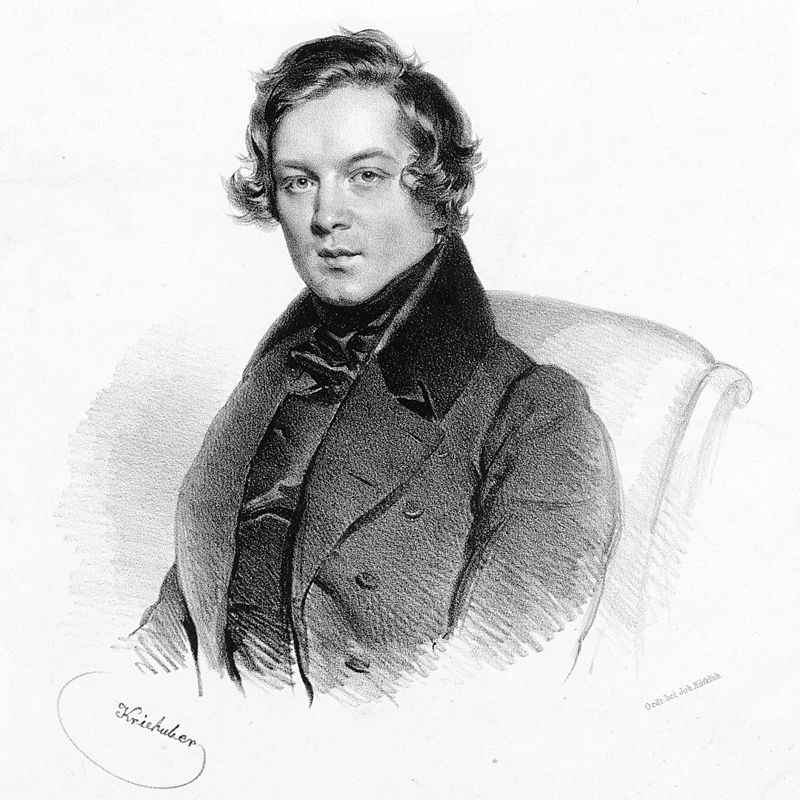
Schumann was literature's gift to music: a bookseller's son from Zwickau who hesitated between poetry and the piano until his twenties, then poured the novelist's imagination into everything he wrote. When an injury ended his hopes as a virtuoso, he switched to becoming the most important music critic of his age. He declared Chopin's genius with “Hats off, gentlemen!” and, in his final published article, Brahms's, and a composer who worked in obsessive year-long waves: a year of songs, a year of symphonies, and in 1842 a single miraculous year of chamber music.
His rock was Clara Wieck, the great pianist he married in 1840 after a courtroom battle with her father. She premiered the Piano Quintet, championed his music across Europe for forty years of widowhood, and remains inseparable from its story.
His last years were shadowed by the mental illness that led him to the asylum at Endenich, where he died in 1856, aged forty-six. The music keeps the truths of rapture and fragility closer than any composer before or since.